
Following the PsychFest event in October last year, NotSafeforTreatment worked with Dr. Meltem Osman, a Community Psychologist who helped to organise that previous event to devise a creative workshop in April 2026 for DClinPsy students who engage each year for Community Psychology learning. The workshop involved key Community Psychology competencies, service user voices and the transference of creative thinking within clinical spaces. As we have used art-making to explore how people navigate, resist, and reshape mental health systems, the activity was designed to be an opportunity to think beyond the more academic formulations of psychology and engage with meaning making collaboratively.
Community psychology places emphasis on power, context, relationships, and collective action. Rather than us defining these concepts, we thought it would be interesting to think about how they are understood, negotiated, and expressed personally and within a group context.
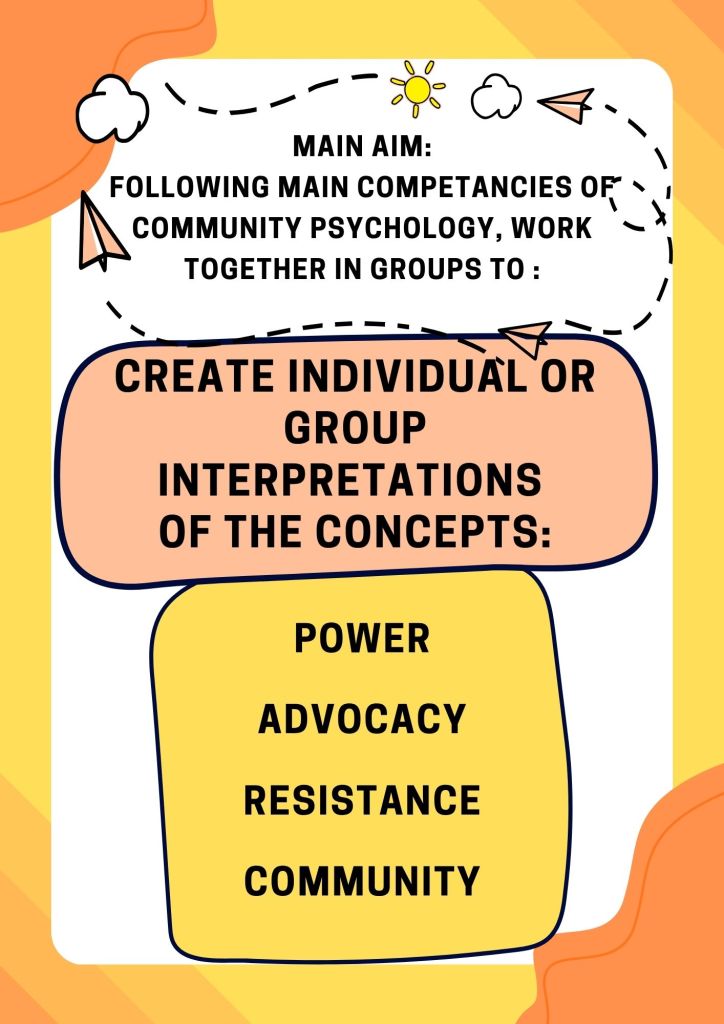
Students worked in small groups to interpret a core concept through creative means. The task was left intentionally open allowing for process, decisions, and interactions to remain as important as the outcome and were intended to give opportunities to think, reflect and explore flexibility.
There were no ‘correct’ answers. Instead, we were interested in:
- How meaning is constructed
- How groups organise themselves
- How resources are used/ not used
- How different interpretations emerge
- How creative thinking can be transferred into clinical spaces
After the activity, we then reflected together on both what was created and how it was created and explored the links between the activity and community psychology principles and practice.
The activity in more detail:
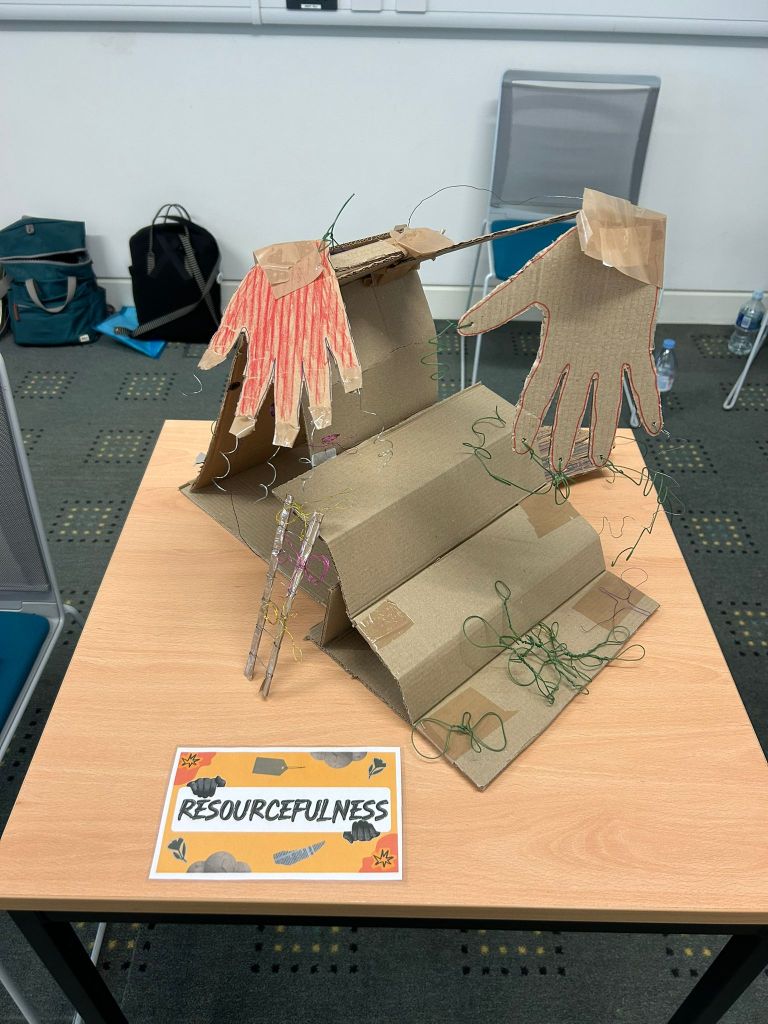
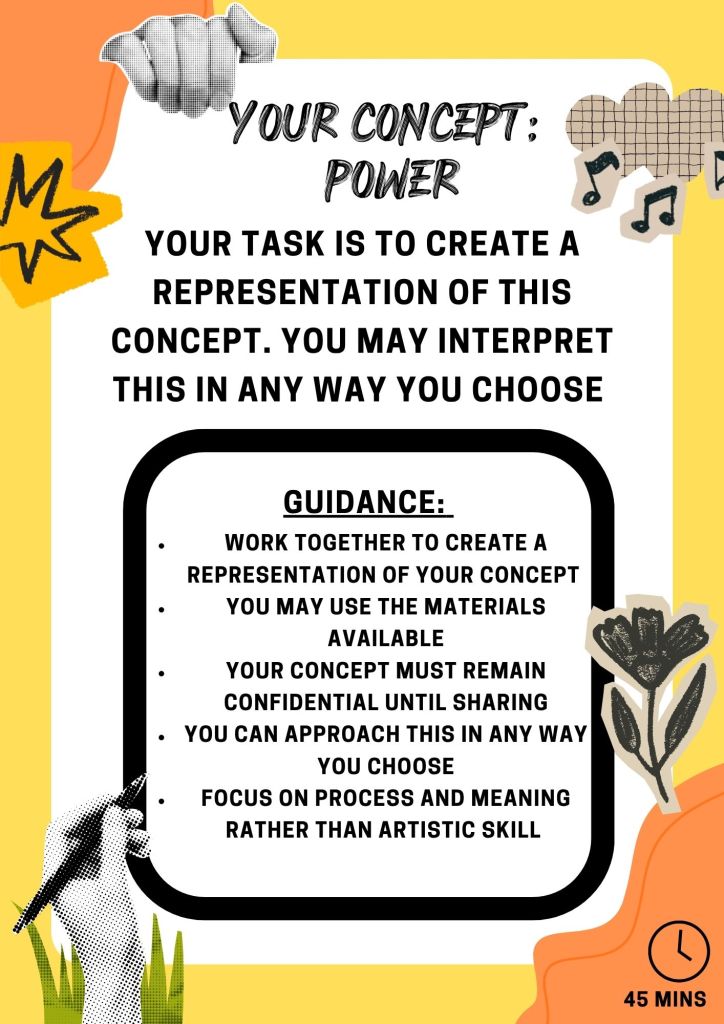
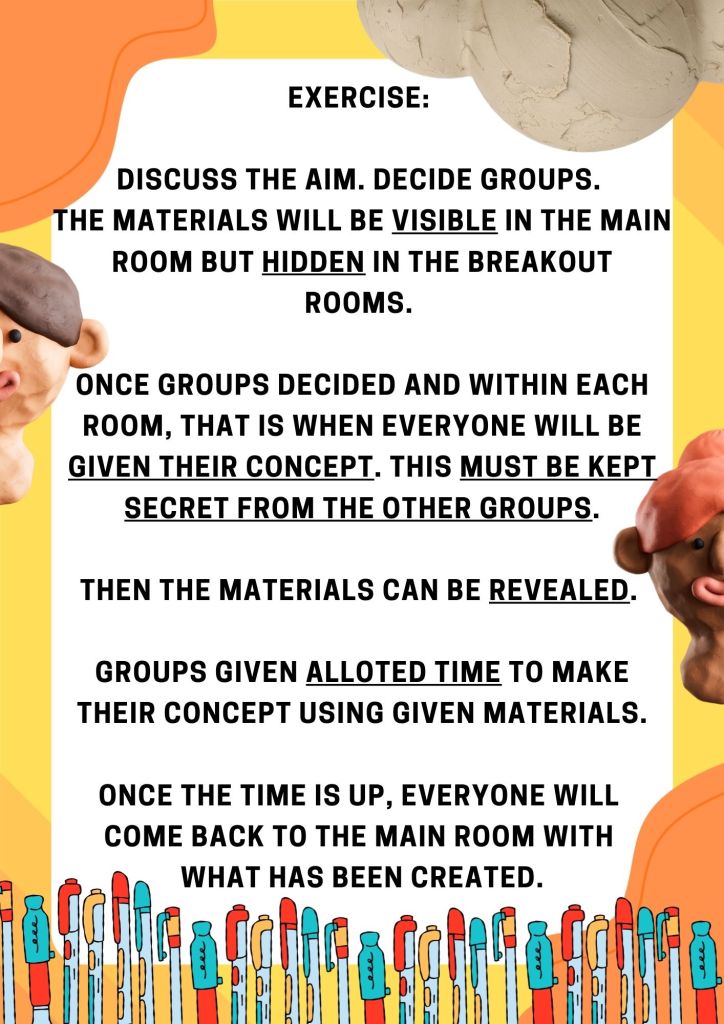
The set up of the day was that there was a main room where students could listen and gather, along with 3 other breakout rooms. Each room was labelled with a word that has an association to mental health systems: Specialist, Gold Standard, Resourcefulness and Resilience. The cohort were split into four groups and each assigned one concept with links to community psychology. These included: Power, Advocacy, Resistance and Community. Only the group assigned to the concept were aware of the concept they had been assigned, everyone else was unaware as to what everyone else had been given. Each group also had access to different materials, with each room being resourced differently. We deliberately over-resourced the main room so that every member of the cohort witnessed these resources before being split into smaller groups and then seeing what they had been provided with. It was explained that the task was to create a representation of the assigned concept using the materials provided in any way they chose. The only rule was that the concept must remain confidential until the sharing stage that was to take place at the end. There was no expectation of artistic skill and focus remained on expression, meaning and the overall process. Groups were given 45 minutes to create their piece and after that time they were informed that all groups would return to the main room where the work from each group would be displayed anonymously and then everyone would take part in a “blind interpretation”. With reflection, if repeated, we would replace this part with more discussion time in the form of ‘fishbowls’ allowing each group to reflect on their experience of the workshop initially before re-joining with the group as a whole, allowing for feedback and reflection between the students.
FINAL PIECES
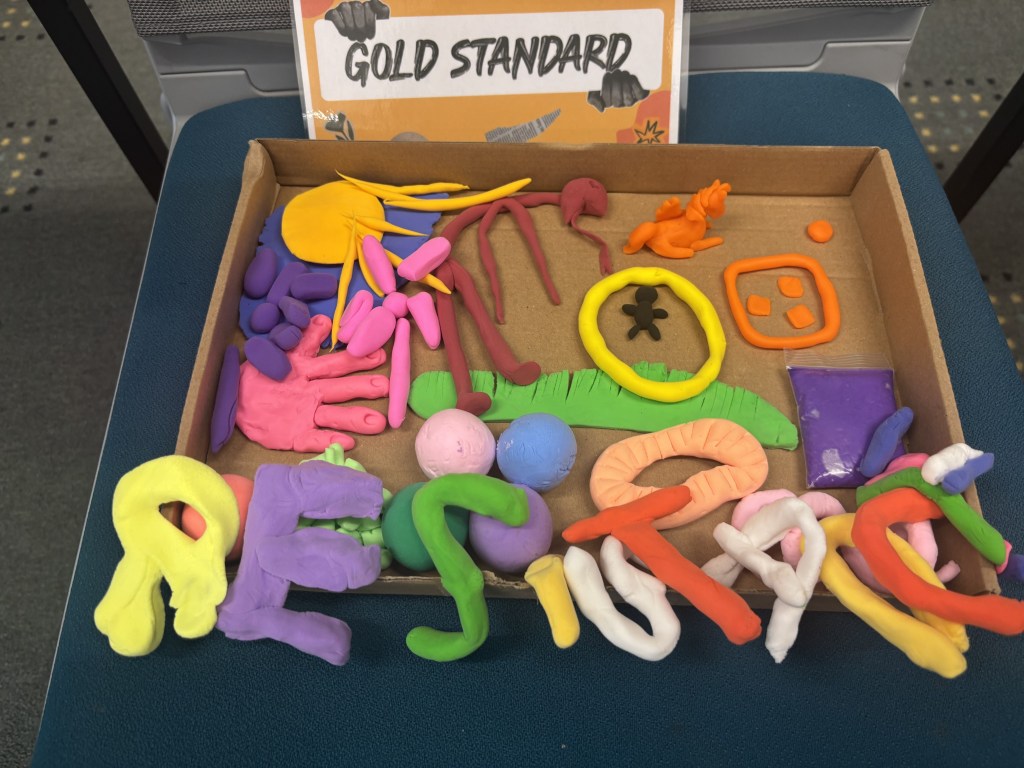
The Collage room felt they were able to get their concept of ‘Advocacy’ across better with a video which they made within the UEA grounds. They made a very impactful short-form video with the whole group holding written statements, with Queen’s “I want to break free” backing track, featuring ideas of marginalisation, oppression, hidden voices, compassion and advocacy.
These were some of the prompts we used for the discussion:
- Did anyone choose to share and borrow or negotiate materials and did you move between rooms?
- Power dynamics during planning and making
- Initiative and permission-seeking
- How did your group organise itself? Did leadership emerge? How? Was it explicit or implicit?
- Whose ideas were prioritised and followed?
- Were any voices marginalised/overlooked?
- Were there any disagreements or uncertainty? How did you navigate this?
- How did you experience the materials you were given? How did they feel? Enabling / limiting / neutral?
- How does this mirror real-world access to resources in services or communities?
- Were there competing interpretations? How were these resolved?
- How did limitations influence your creativity?
- Did constraints feel productive or restrictive
- How did you interpret the ‘rules’ of the task?
- How does this activity reflect real-world systems and services?
- Where do we see- Structural power? Hidden rules? Unequal distribution of resources?
Interesting discussion points:
Rather than interacting between groups, the 3 facilitators, ourselves and Dr Osman were still seen as ‘leaders’ of the space and we were approached many times for permission or for extra resources, if breaks were needed or to leave the space. During the discussion, we revealed that materials could have been shared, that participation was not obligatory and that each room was able to share and discuss with each other, as long as concepts were kept secret, as that was the only ‘rule’ that was set officially. This gave us the chance to encourage the values of community psychology being equality and the awareness of power and flexibility to push normal boundaries and this joining up with the creative process and creative thinking in general. It was interesting to acknowledge what constituted ‘rules’ from the printed task sheets. We wanted to see how much would be obey and which boundaries if any were broken with initiative.
Some students expressed how much they enjoyed the collaborative decision making and planning process – some used the whiteboard to come to a consensus and illustrate plans. They explained that they had missed that type of group problem solving.
We raised that you had to make a creative representation of the concept, so one group went away from the resources and created their own video. Other groups however, adapted to the materials available. This demonstrated flexibility and creative thinking that can be applied in all kinds of settings.
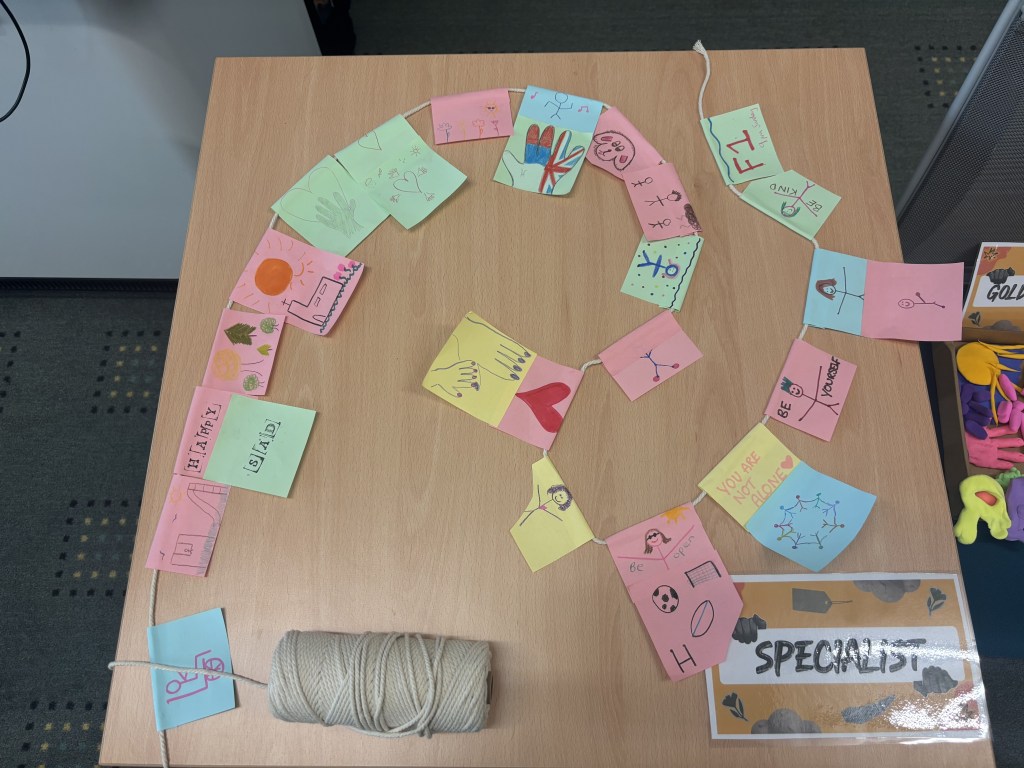
Due to rushing setting up, we forgot to put arguably the most important resource in the main room: PAPER. However, we did know this until much later when someone approached asking for it. As this was our error, we went searching for paper, however this had already been used by the collage room so it took longer to find some spare. Once we had sourced some and returned to the main room group, they had already found another way to create their concept and no longer needed the paper. This was interesting as it demonstrated an ability to adapt and overcome when the resource needed was unavailable. Ultimately, it should have been accessible as it was one of the most fundamental resources but despite this, the group got on with creating their concept with what they had available, using post it notes as a base and string to make a ‘washing line’ so they could still communicate what they wanted to. This led us to think about the system as a whole, where it can often be discovered that fundamentals and basics can be absent for whatever reason. The ability to adapt and overcome this, though not ideal, is a useful skill and creative thinking can assist in moving past what can easily become a block or barrier. Flexibility in thinking and approaching is transferable to problem solving in settings where problems are frequent.
WHAT WE HAVE TAKEN AWAY AND HAVE LOOKED INTO FURTHER
One of the main themes we found from the discussion was finding or asking for ‘permission to care’. With strapped systems, bureaucratic processes, tick box exercises and the hierarchical structure of the NHS seems to be an antithesis of community psychology competencies, some of the students expressed frustration in the very gaps they would need to be complicit in and that they would not be able to apply community psychology values within their field as they feared the consequences. There were discussions of doing small acts, compromises and finding small ways to make changes that felt safe enough and that intention in actioning were important.
A lot of the set up was a rush. If we did this again, we would put the ‘specialist’ resources at the front of that room as they weren’t seen at the back so there were no expectations on differing resources when students went into the breakout rooms.
FEEDBACK
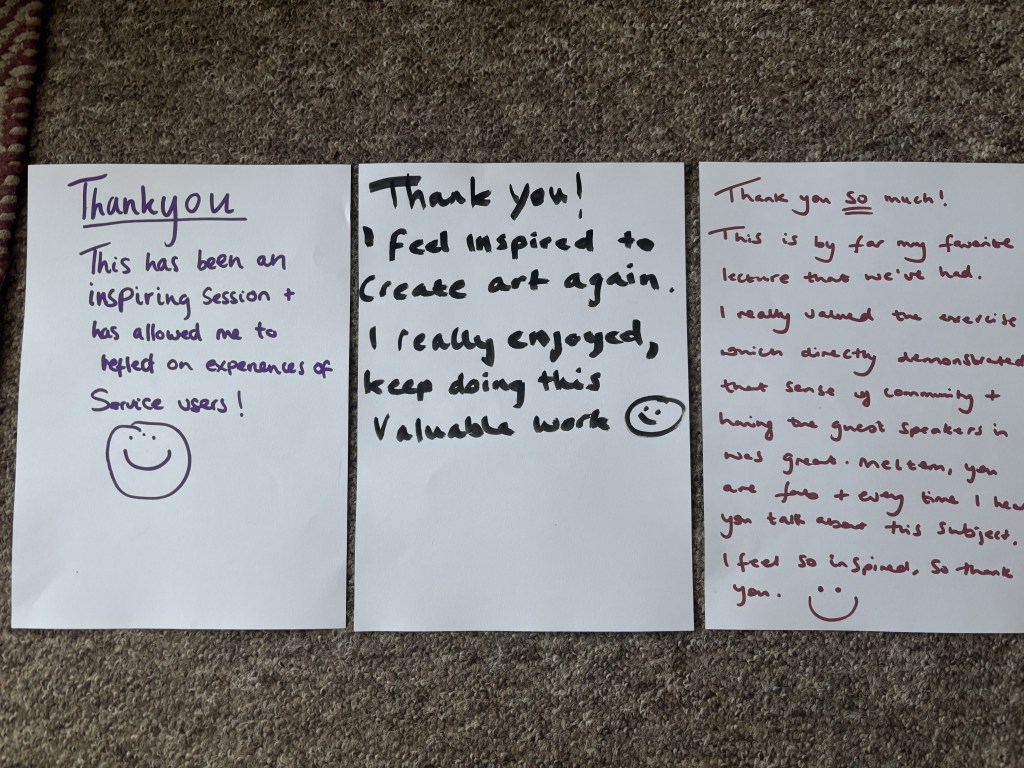
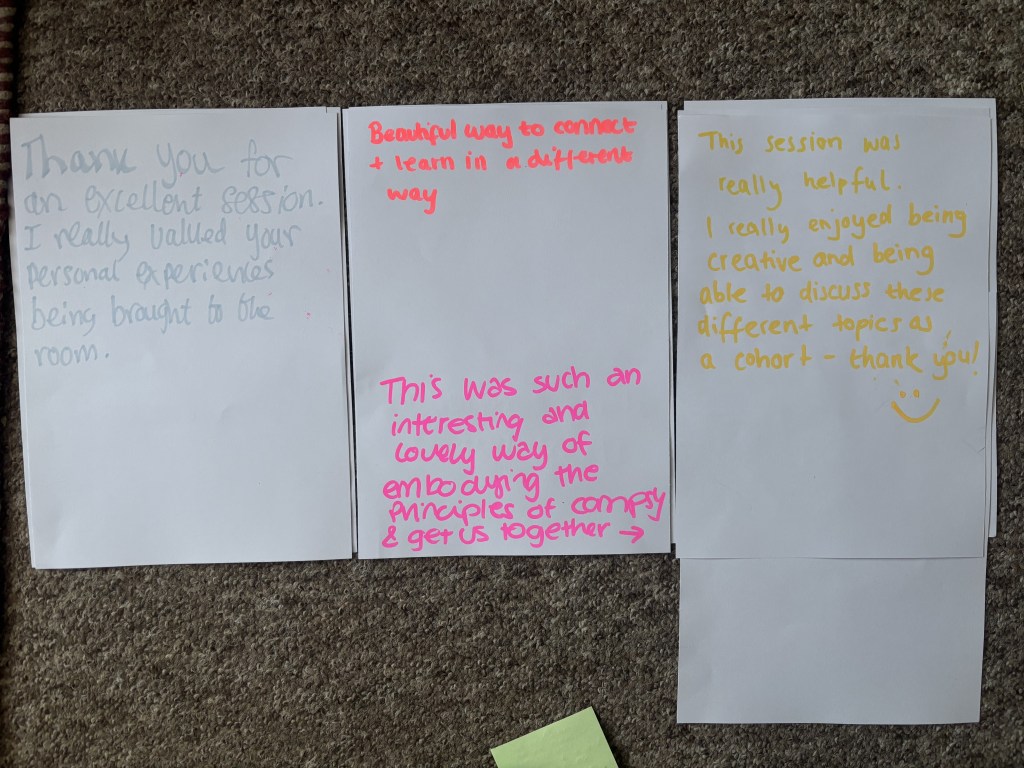
We were really pleased with the feedback about the workshops. Creative workshops seemed to be a rarity so we hoped that the students enjoyed a different type of hands-on learning where other skills were applied and reflected upon.
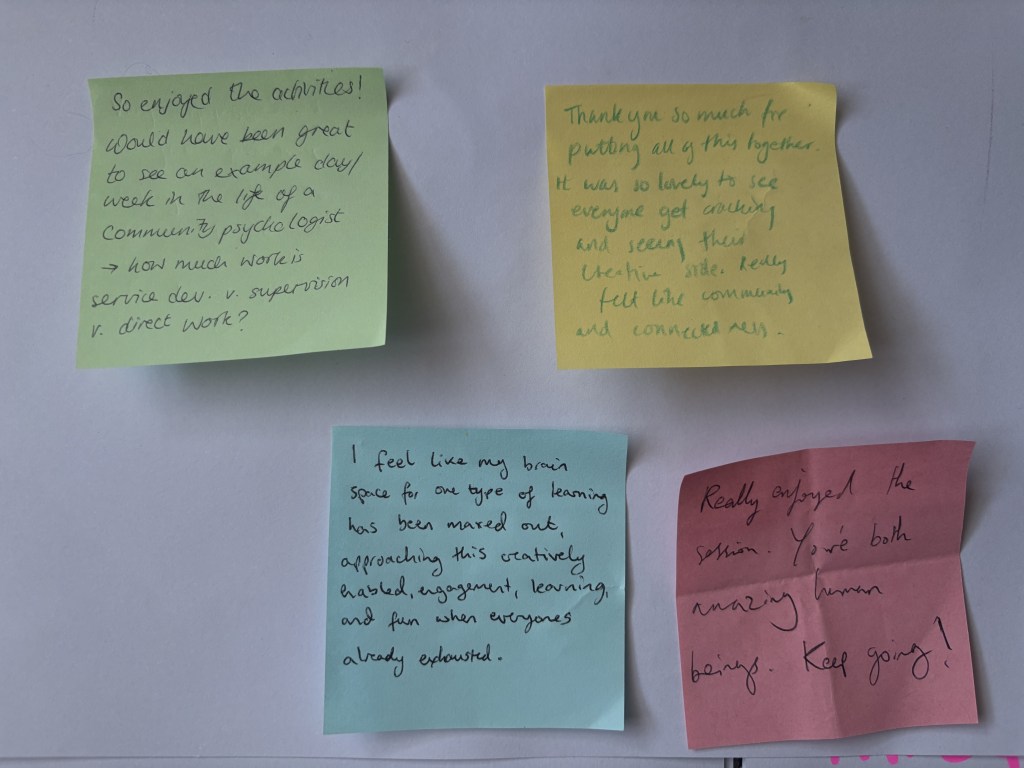
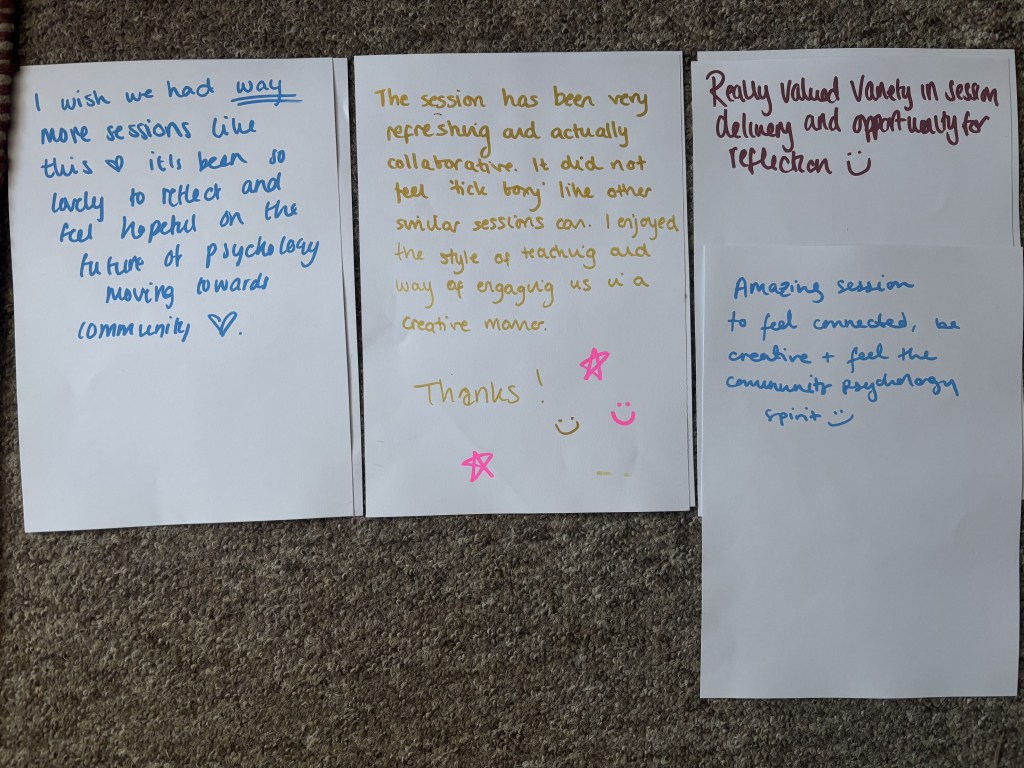
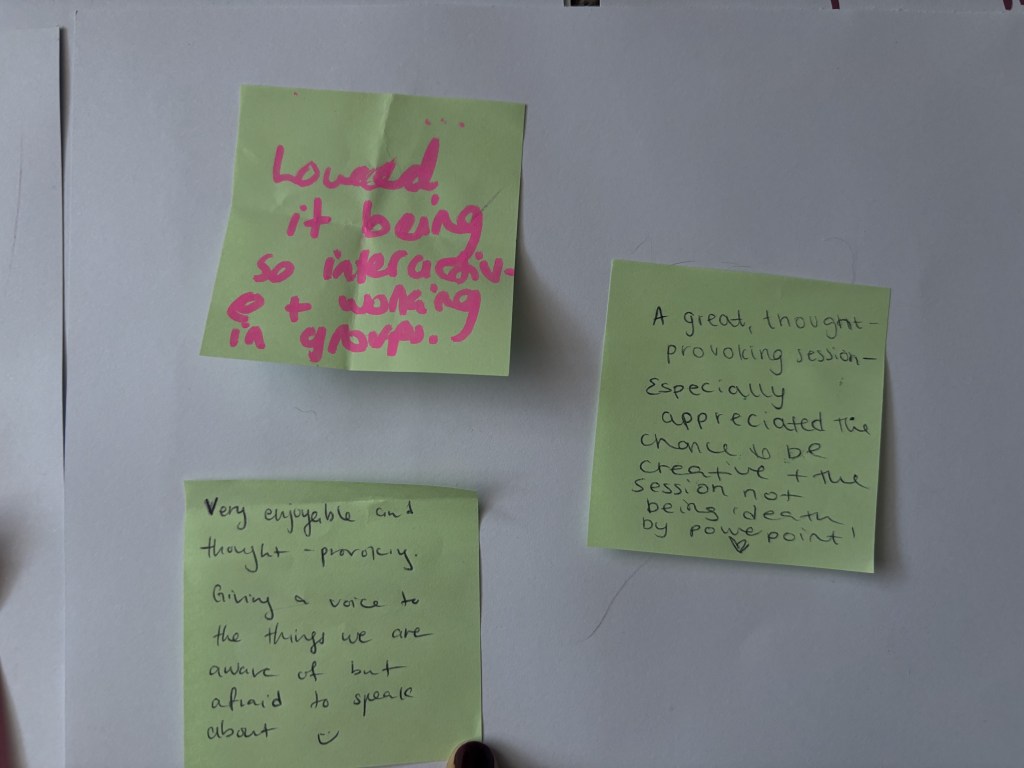
Some of our Workshop Resource examples:
To find out more about the Community Psychology section of BPS, follow the link below:
https://www.bps.org.uk/member-networks/community-psychology-section


Leave a Reply